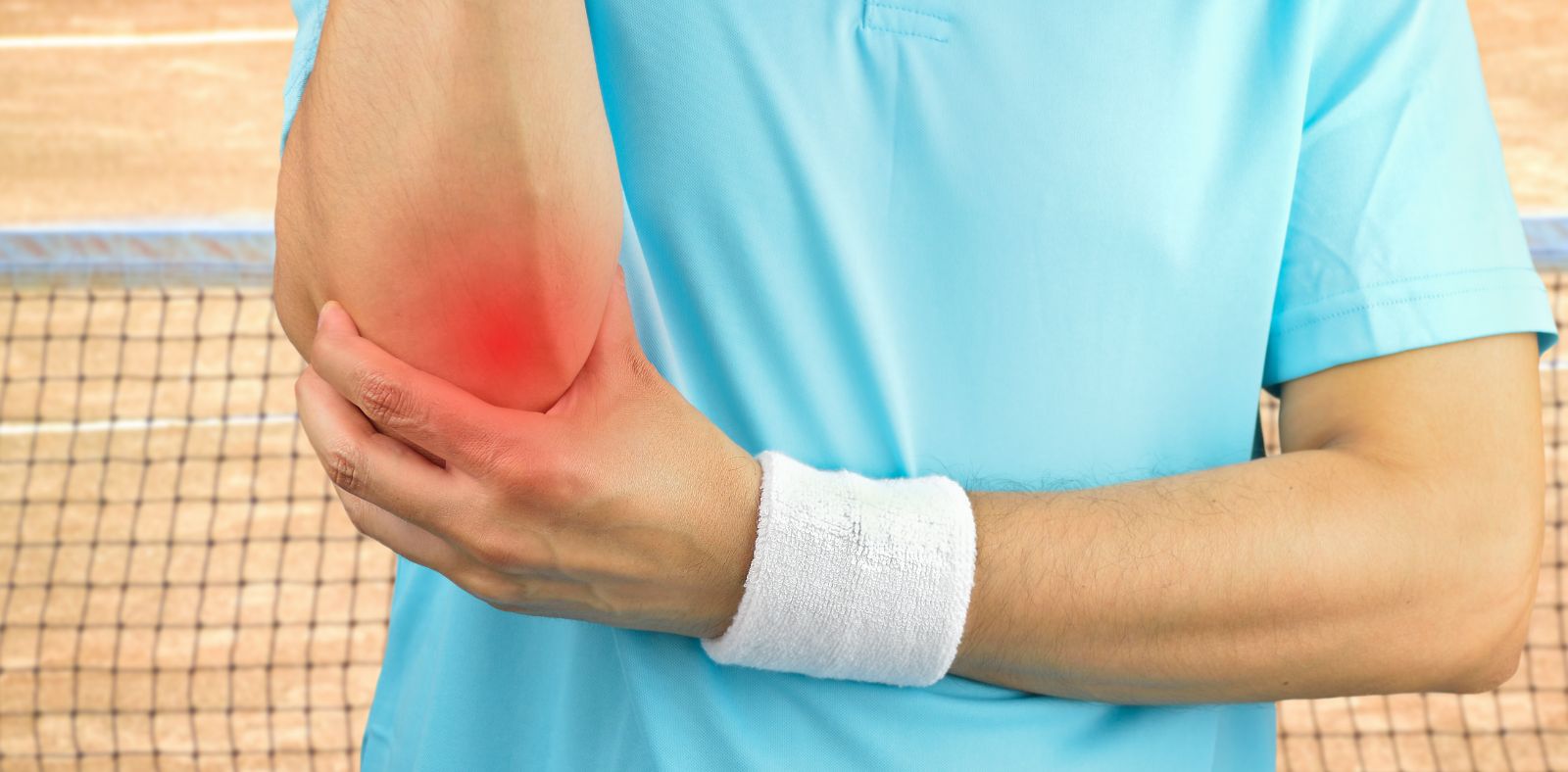
Pain on the outside of the elbow can make surprisingly simple tasks difficult. Lifting a water bottle, turning a door handle, using tools, or gripping a racquet may become uncomfortable. One common reason for this type of pain is tennis elbow, a condition involving the tendons that connect the forearm muscles to the outer elbow.
Despite its name, tennis elbow is not limited to people who play tennis. Repeated gripping, lifting, wrist movements, and occupational activities can place excessive stress on these tendons over time.
At Aalayam Rehab Care, assessment focuses on understanding the activities that trigger elbow pain, evaluating movement and function, and planning rehabilitation according to the individual’s condition. Treatment may combine exercise-based physiotherapy with supportive therapies such as eLaserCalmative® when clinically appropriate.
What is Tennis Elbow?
Tennis elbow, medically called lateral epicondylitis or lateral elbow tendinopathy, is a painful condition affecting the tendon attachment on the outside of the elbow. It develops when repeated loading places more stress on the tendon than it can comfortably tolerate.
The muscles involved in extending the wrist and fingers attach near the lateral epicondyle, the bony prominence on the outer elbow. Repetitive strain can produce changes within this tendon and make gripping or lifting painful.
Although sometimes described as a tennis elbow injury, it may develop gradually rather than after one obvious injury. Racquet sports are only one possible trigger. Manual work, exercise, household activities, and jobs involving repeated hand or wrist movements can also contribute.
What Causes Tennis Elbow?
The main causes of tennis elbow involve repeated or excessive loading of the wrist and forearm muscles. The problem may begin when the intensity, frequency, or type of activity exceeds what the tendon is accustomed to handling.
Activities associated with tennis elbow may include:
- Repeated backhand strokes or racquet sports
- Weight training or repetitive gym exercises
- Frequent lifting or carrying
- Using screwdrivers, hammers, or other hand tools
- Painting, plumbing, carpentry, or similar manual work
- Repeated gripping or twisting movements
- A sudden increase in sports or physical activity
Technique also matters. Poor lifting mechanics, unsuitable equipment, or repeatedly working with the wrist in a strained position can increase tendon loading.
Not everyone performing these activities develops tennis elbow. Age, previous injuries, workload, muscle strength, and individual tendon health can influence risk.
What Are the Symptoms of Tennis Elbow?
The most recognisable tennis elbow symptom is pain or tenderness on the outside of the elbow. The discomfort usually becomes more noticeable while gripping, lifting, twisting, or extending the wrist.
Common tennis elbow symptoms include:
- Tenderness around the outer elbow
- Pain when gripping an object
- Discomfort while lifting a cup, bag, or pan
- Pain while opening jars or turning handles
- Reduced grip strength
- Pain extending from the elbow into the forearm
- Discomfort during racquet sports or strength training
Tennis elbow pain may begin mildly and gradually interfere with everyday activities. Some people have little discomfort at rest but experience sharp pain when the tendon is loaded.
Severe swelling, major loss of movement, numbness, significant weakness, or pain following a fall or direct injury requires medical assessment because another condition may be responsible.
How is Tennis Elbow Diagnosed?
A doctor usually diagnoses tennis elbow through a physical examination and a review of your symptoms, work, sports, and daily activities. The aim is to identify pain around the outer elbow and check whether specific movements reproduce the symptoms.
During the examination, the doctor may:
- Press around the outer elbow to check for tenderness.
- Perform Cozen’s test, in which you extend your wrist against resistance to see whether it triggers pain.
- Perform Mill’s test, which stretches the affected tendon and may reproduce symptoms.
- Check wrist, finger, and elbow movement.
- Assess grip strength and compare the affected arm with the other side.
Imaging is usually not required for straightforward cases. However, a doctor may recommend further tests if symptoms are severe, persistent, or suggest another condition.
These may include:
- X-rays to rule out arthritis, fractures, or other bone-related problems.
- MRI scans to assess the tendon and surrounding soft tissues in greater detail.
- Electromyography (EMG) when nerve compression or another neurological cause is suspected.
These tests help distinguish tennis elbow from other conditions that can cause similar pain around the elbow and forearm.
Tennis Elbow Treatment: What Helps?
Most people begin tennis elbow treatment with non-surgical measures aimed at controlling pain and gradually restoring the tendon’s ability to tolerate load. Treatment should address both the painful tendon and the activities contributing to repeated strain.
A rehabilitation plan may include activity modification, therapeutic exercise, physiotherapy, supportive devices, and selected pain-management therapies. Exercise remains an important component of conservative treatment, while evidence for individual physical modalities varies.
Tennis Elbow Physiotherapy Treatment
Tennis elbow physiotherapy treatment focuses on restoring strength, movement, grip function, and tolerance to daily or sporting activities. The programme should progress according to symptoms rather than following the same routine for everyone.
Depending on the assessment, physiotherapy for tennis elbow may include:
- Progressive forearm strengthening
- Isometric or eccentric exercises
- Wrist and forearm mobility exercises
- Grip strengthening
- Manual therapy where appropriate
- Shoulder and upper-limb strengthening
- Advice on workplace or sporting technique
- Gradual return to normal loading
The goal is not merely to make the elbow temporarily feel better. Rehabilitation also prepares the tendon to manage the activities that previously triggered symptoms.
Tennis Elbow Treatment at Home
Tennis elbow treatment at home mainly involves reducing unnecessary tendon strain while continuing suitable movement and prescribed exercises. Complete avoidance of arm movement for long periods is usually unnecessary unless specifically advised.
Practical measures may include temporarily reducing painful lifting or gripping, changing how repetitive tasks are performed, and following the exercise programme recommended by the physiotherapist.
Cold packs may provide temporary comfort for some people. Pain-relieving medicines or topical preparations should be used according to advice from a doctor or pharmacist, particularly in people with other medical conditions.
Home remedies for tennis elbow should complement appropriate treatment, not replace assessment when pain persists or function is worsening.
Do Tennis Elbow Braces and Supports Help?
A tennis elbow brace or forearm support may reduce discomfort during some activities by altering the load placed on the painful tendon. However, supportive devices do not correct the underlying loss of tendon capacity and should not replace rehabilitation.
Several products are described using terms such as:
| Support | How it may be used |
| Tennis elbow brace | Provides external support during activities that provoke symptoms |
| Tennis elbow band | Usually worn around the upper forearm to modify tendon loading |
| Tennis elbow belt | Another term commonly used for a counterforce forearm strap |
| Tennis elbow support | General term covering straps, sleeves, or braces |
| Tennis elbow splint | May restrict selected wrist movements in certain situations |
The correct fit matters. An excessively tight support can cause discomfort and should not be worn simply because more compression feels as though it must be doing more work.
Tennis Elbow Exercises and Rehabilitation
Tennis elbow exercises focus on gradually rebuilding the strength and load tolerance of the affected forearm muscles and tendons. Progressive loading is generally more useful than complete rest, although exercises should be adjusted if they cause sharp or increasing pain.
Common rehabilitation exercises may include:
- Resisted Wrist Extension: Rest the forearm on a table with the palm facing downward. Hold a light weight, slowly lift the wrist upward, then lower it over about three to four seconds. This can be performed for 2-3 sets of 8-15 repetitions.
- Supination and Pronation Strengthening: Keep the elbow bent to about 90 degrees and close to the body. Holding a light dumbbell or hammer, slowly rotate the forearm so the palm faces upward and then downward. Aim for 2-3 sets of 8-15 repetitions.
- Grip Endurance Exercises: Gently squeeze a soft ball or hand gripper to improve grip endurance. Holding a light dumbbell or kettlebell while walking may also be introduced as strength improves.
- Isometric Wrist Holds: When repeated wrist movement is uncomfortable, the wrist can be held steadily in an extended position without moving it. Holds of around 30-45 seconds may be used depending on pain tolerance and rehabilitation goals.
Where Does eLaserCalmative® Fit into Tennis Elbow Therapy?
eLaserCalmative® may be incorporated into a broader tennis elbow rehabilitation plan when the treating clinician considers it appropriate. It should be viewed as a supportive therapy alongside assessment, exercise, and activity modification rather than a replacement for active rehabilitation.
What is eLaserCalmative®?
eLaserCalmative® is a technology developed by Aalayam that combines low-level cold laser therapy with nano-current bio-stimulation. The device is designed for non-invasive application during the management of joint and muscular pain.
For tennis elbow, treatment is selected after assessing the location of pain, functional limitations, and response to loading. The number and duration of sessions may therefore vary between individuals rather than following a fixed schedule.
How Cold Laser Therapy May Support Tennis Elbow Recovery
Low-level laser therapy delivers light energy to the treatment area and has been investigated as a pain-management modality for lateral elbow tendinopathy. Some studies report short-term improvements in pain and function, although findings differ according to the laser parameters and treatment protocol used. For this reason, eLaserCalmative therapy is best integrated with a structured rehabilitation programme rather than presented as a stand-alone cure for tendon pain.
Nano-Current Therapy and Pain Management
Nano-current therapy uses very low electrical currents as part of the eLaserCalmative® treatment approach. Within rehabilitation, it is used as a supportive pain-management modality while exercise and progressive loading address movement and functional recovery.
Response to any physical therapy modality can differ between patients. Treatment selection should therefore consider the severity and duration of symptoms, activities affected, clinical findings, and individual treatment goals.
When is Tennis Elbow Surgery Considered?
Tennis elbow surgery is rarely the first treatment and is generally reserved for persistent cases that have not responded adequately to prolonged conservative management. Before considering surgery, the diagnosis should be reassessed and appropriate non-surgical treatment given sufficient time.
Surgical procedures vary but may involve treating damaged tendon tissue around the outer elbow.
Surgery may be discussed when pain and functional limitations remain substantial after several months of appropriate treatment. Recovery still involves rehabilitation, because surgery does not eliminate the need to rebuild strength and gradually restore normal arm function.
Tennis Elbow Recovery Time and Return to Activity
There is no fixed tennis elbow recovery time because tendon recovery depends on symptom duration, workload, treatment, general health, and how gradually activity is resumed. Improvement commonly occurs over weeks to months rather than within a few days.
Some cases settle relatively quickly, while persistent lateral elbow tendinopathy can continue for many months. This does not necessarily mean that the condition is permanent.
During recovery, progress may involve gradually returning to:
- Normal household and work activities
- Pain-free gripping and lifting
- Strength exercises
- Heavier occupational tasks
- Racquet sports or other demanding activities
Returning to full activity should depend on function and load tolerance rather than the calendar alone. Sudden increases in training, repetitive lifting, or gripping can trigger another flare of tennis elbow pain.
When Should You See a Tennis Elbow Specialist?
A tennis elbow specialist should assess persistent, worsening, or function-limiting elbow pain, particularly when simple activity changes have not helped. Early assessment is also sensible when the diagnosis is uncertain.
Seek evaluation if you have:
- Pain continuing despite modifying aggravating activities
- Increasing weakness or difficulty gripping
- Significant restriction of elbow movement
- Pain interfering with work or sleep
- Numbness or tingling in the arm or hand
- Marked swelling
- Symptoms following a fall or direct trauma
People who regularly participate in sport may also benefit from assessment at a sports injury clinic to identify technique, training-load, or movement factors contributing to recurrent symptoms.
Tennis Elbow Care at Aalayam Rehab Care
At Aalayam Rehab Care, tennis elbow management begins by assessing the pain, affected movements, functional limitations, and activities that may be overloading the elbow. These findings help determine the most appropriate non-surgical rehabilitation plan.
Care may combine therapeutic exercises, movement and strengthening work, activity guidance, supportive techniques, and technology-assisted treatment such as eLaserCalmative® where appropriate.
Aalayam Rehab Care also provides home-based treatment options, allowing selected rehabilitation services to be delivered at the patient’s home. Treatment is adjusted according to progress rather than assuming that every person with elbow pain requires the same therapy.
The aim is to improve comfortable movement and function while helping the patient gradually return to everyday, occupational, or sporting activities. If elbow pain is persistent or interfering with daily activities, book a consultation at Aalayam Rehab Care for an individual assessment and rehabilitation plan.
Conclusion
Tennis elbow can cause persistent outer-elbow pain and make gripping, lifting, exercise, and everyday activities uncomfortable. Although the condition commonly develops through repeated tendon loading, similar symptoms can have other causes, making assessment important when pain persists.
Most cases begin with conservative tennis elbow treatment, including activity modification, progressive exercises, physiotherapy, and selected supportive therapies. eLaserCalmative® may be incorporated into rehabilitation when clinically appropriate.
Frequently Asked Questions
There is no instant cure for tennis elbow. Reducing aggravating activities, beginning appropriate strengthening exercises, and receiving physiotherapy when needed may support recovery. Persistent pain should be assessed so treatment can address the diagnosis and contributing factors.
Yes. Most people with tennis elbow are initially treated without surgery using activity modification, progressive exercise, physiotherapy, and other conservative measures. Surgery is usually considered only when persistent symptoms cause significant problems despite an adequate period of non-surgical treatment.
There is no single best tennis elbow exercise for everyone. Progressive wrist-extensor strengthening, including eccentric or isometric loading, is commonly incorporated into rehabilitation. Exercise selection and resistance should match the person’s pain, strength, functional limitations, and current tendon tolerance.
No, tennis elbow is not necessarily permanent, although recovery can be slow in some people. Symptoms may continue for several months, particularly when repetitive strain persists. Appropriate load management, strengthening, and gradual return to activity can support recovery.
A tennis elbow brace or forearm strap may reduce discomfort during gripping or repetitive activities for some people. It provides temporary support but does not replace strengthening and rehabilitation. Correct positioning and fit are important when using any elbow support.
Seek professional assessment when elbow pain persists, worsens, affects normal activities, or causes significant weakness. Earlier evaluation is advisable after trauma or when symptoms include major swelling, restricted movement, numbness, tingling, or other features suggesting another condition.